
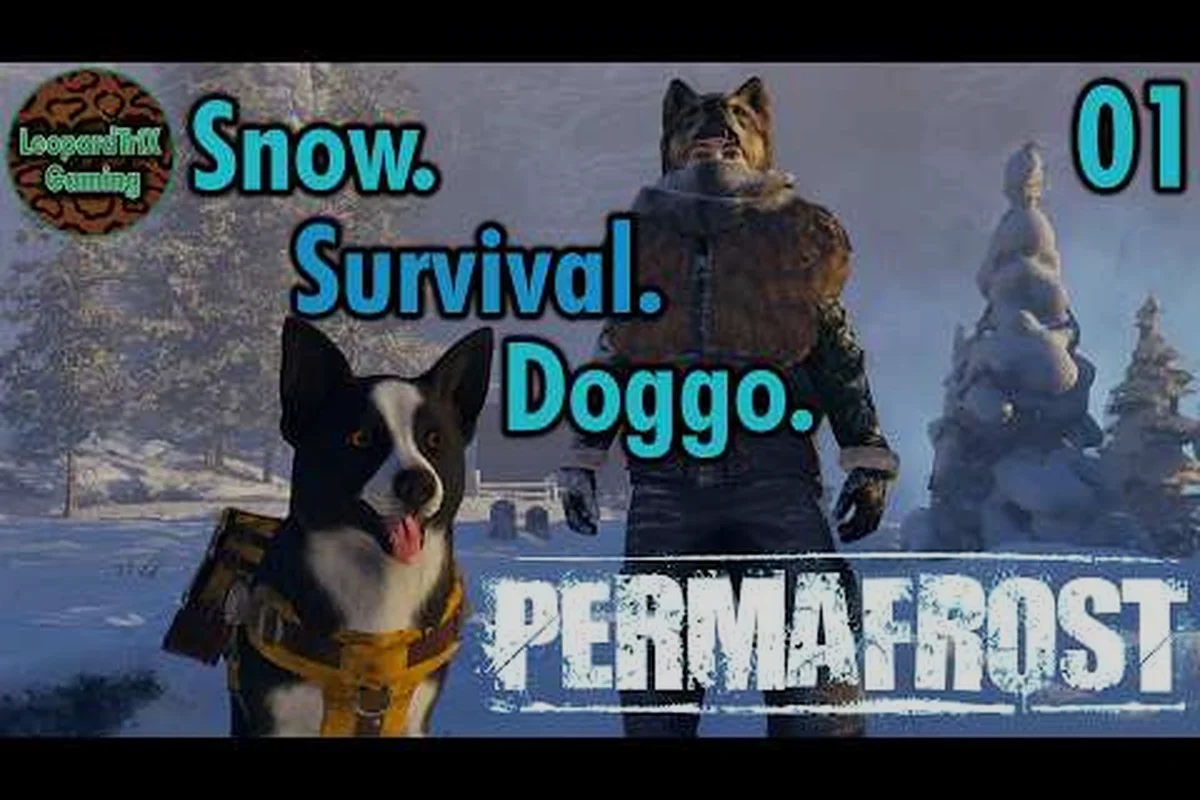
Your canine companion in Permafrost is not a cosmetic sidekick or a simple pack mule. The dog you rescue from the frozen ruins actively scouts ahead, warns you of danger before you can see it, carries supplies when your own inventory is full, and keeps you grounded when the endless winter silence starts to wear on your mind. This permafrost pet guide breaks down every companion ability, explains how the early warning system actually works, and walks you through fixes for the most common dog bugs that players report during Early Access.
Understanding Permafrost Companion Abilities
The dog in Permafrost operates on a set of companion abilities that trigger automatically based on distance, threat state, and your current survival needs. Unlike a traditional RPG pet with a skill bar, your dog acts more like a living detection system that reads the environment and reacts before you even register a threat. According to the official store page for Permafrost on Steam, the dog moves ahead to scout, alerts you to danger, tows supplies, and anchors your morale when the quiet grows overwhelming.
Core Ability Categories
The companion system divides into four functional layers, each tied to a different survival pressure — and understanding why they're layered matters more than memorizing what each one does. In practice, a single companion is simultaneously running all four jobs: it scouts ahead for loot caches and predator spawns, monitors its detection radius for early warning barks, carries a portion of your pack storage, and remains alert for camp guarding triggers when you enter a shelter. This overlap means the layers aren't isolated features but a single behavior stack evaluated every tick, which is why a pathing failure in the scouting layer cascades downward — the dog stops moving, its detection radius shrinks to point-blank, and the camp guarding trigger never arms because the companion never reaches the shelter perimeter.
| Ability Layer | Primary Function | Trigger Condition | Player Benefit |
|---|---|---|---|
| Scouting | Moves ahead of the player in open terrain | Automatic when traveling | Reveals threats and loot before you commit |
| Early Warning | Barks, growls, or changes posture | Enemy or hazard within detection radius | Gives you 3-6 seconds to reposition |
| Pack Storage | Carries extra supplies and resources | Manual transfer or auto-pickup | Expands effective inventory without weight penalty |
| Camp Guarding | Stays near shelter and alerts to intruders | When player is inside a shelter | Prevents surprise attacks during crafting or sleep |
Each layer interacts with the others, which means a dog that is stuck on terrain or bugged in its pathing will often fail at multiple jobs simultaneously. Players report that the scouting ability is the first to break when the companion gets stuck, followed by early warning failures that leave you exposed to wolf packs or frostbite events.
How Companion Abilities Scale
Your dog does not level up in a traditional sense, but its effectiveness improves as you restore technology and build better shelter infrastructure. Community testing suggests that companion detection range expands when you craft signal boosters or repair certain checkpoint towers, though exact numbers remain unverified as of the current Early Access build. The dog also becomes more reliable at pack storage when you equip it with upgraded harnesses found in military caches.
Permafrost Dog Early Warning Mechanics
The permafrost dog early warning system is the single most valuable survival tool in the game, and it works through a combination of audio cues, body language, and subtle camera shifts. When your dog detects a threat, it does not simply bark once and go quiet. Instead, it enters a threat posture that includes lowered head, raised hackles, and a directional gaze toward the danger source.
Reading the Warning Signals
Each signal maps to a distinct threat level and response window, and misreading even one can cascade into a fatal encounter. For example, a single bark might seem harmless, but if you keep moving at full speed instead of slowing to scan the horizon, you can walk straight into the repeated barking range before you have time to find cover. The silent point is especially deceptive because it produces no audio cue at all — players who rely on sound alone will miss the dog freezing entirely and blunder onto a thin ice patch or into a crevasse that kills instantly. Treat the table below as a decision tree: the moment your companion shifts from one signal to the next, your response should escalate accordingly, because the gap between a low growl and an active predator's attack is often under two seconds.
| Warning Signal | Dog Behavior | Meaning | Recommended Response |
|---|---|---|---|
| Single Bark | Short, sharp bark with ears up | Minor threat or distant movement | Slow down, scan horizon |
| Repeated Barking | Continuous barking with pacing | Active predator or hostile NPC nearby | Stop moving, find cover |
| Low Growl | Deep growl with hackles raised | Immediate threat within melee range | Draw weapon, back away |
| Silent Point | Dog freezes and stares in one direction | Hidden danger or environmental hazard | Crouch, observe before advancing |
| Whine and Retreat | Dog backs toward player while whining | Overwhelming threat or blizzard incoming | Seek shelter immediately |
The silent point is the most commonly misunderstood signal. New players often interpret a frozen dog as a bug, when in fact the companion is indicating a thin ice patch, a buried predator, or a crevasse that would kill you instantly. Community reports emphasize that the silent point almost always means environmental danger rather than a living enemy.
Early Warning Range and Limitations
The detection radius for early warning appears to be roughly 15-25 meters in clear weather, though this drops significantly during whiteout conditions or heavy snowfall. Your dog cannot warn you about threats it cannot perceive, which means blizzards create dangerous blind spots where even a well-trained companion fails to alert you. Players who rely entirely on the dog during storms often report deaths from frostbite ambushes that the companion never signaled.
Permafrost Dog Mechanics Deep Dive
The underlying permafrost dog mechanics govern how your companion moves, what it can carry, and how it interacts with the frozen environment. These mechanics are not always intuitive, and several behaviors that look like bugs are actually intentional design choices that punish careless movement or poor pathing decisions.
Pathing and Terrain Interaction
Your dog follows a navmesh pathing system that prioritizes safe terrain over direct routes. This means the companion will sometimes take a longer path around a frozen lake or climb a ridge instead of following you straight across dangerous ice. When the dog refuses to follow, it is often because the direct path contains a hazard that the dog's self-preservation logic flags as too risky.
| Terrain Type | Dog Behavior | Player Risk | Notes |
|---|---|---|---|
| Solid Snow | Follows directly behind player | Low | Normal movement speed |
| Thin Ice | Refuses to cross, circles the edge | High | Dog detects ice thickness before you do |
| Steep Slopes | Finds alternate route or waits | Medium | Dog will not climb surfaces it cannot descend |
| Deep Snowdrifts | Slows significantly, may get stuck | Low | Common source of the stuck bug |
| Rocky Outcrops | Jumps across gaps, may fail | Medium | Pathing errors increase near cliffs |
The deep snowdrift interaction is the most frequent trigger for the stuck bug that players report. When the dog enters a drift that is deeper than its pathing algorithm expects, it can become trapped in a loop where it tries to move forward, fails, resets, and tries again indefinitely.
Inventory and Carry Weight
Your dog's pack storage is not unlimited, and overloading it causes the companion to slow down dramatically. The base carry capacity appears to be around 15-20 kg, though this increases with upgraded harnesses. When the dog is overloaded, it will refuse to scout ahead and instead stays close to you, which effectively disables the early warning system. This creates a dangerous trade-off between carrying more loot and maintaining your detection coverage.
Fixing Common Permafrost Dog Bugs
The permafrost dog bug reports during Early Access cluster around three main issues: the companion getting stuck on terrain, the dog failing to respond to commands or follow, and the early warning system triggering false positives or going completely silent. Each bug has workarounds that players have discovered through trial and error.
The Stuck Dog Problem
When your permafrost dog stuck issue occurs, the companion typically freezes in place, refuses to move, and may emit a constant whine or bark loop. This is the most disruptive bug because it disables all companion abilities simultaneously — including the permafrost dog early warning growl that alerts you to incoming blizzards and predator spawns, leaving you blind to environmental threats. The root cause is usually a pathing failure: the dog's navigation mesh gets interrupted when it tries to traverse steep ice shelves, collapsed snow bridges, or narrow rock crevices that the game flags as non-walkable, yet the companion's AI still attempts the route. Players on the permafrost companion abilities forums note this happens most frequently near the Glacial Hollow checkpoint and the Frozen Creek ravine, where elevation changes exceed the dog's step-height threshold.
| Fix Method | Steps | Success Rate | Notes |
|---|---|---|---|
| Distance Reset | Walk 50+ meters away until dog despawns, then return | High | Dog respawns at your position |
| Fast Travel | Use any checkpoint to fast travel | Very High | Forces companion reposition |
| Shelter Entry | Enter and exit a shelter building | Medium | Works if dog is near the entrance |
| Reload Save | Save and reload the game | High | Most reliable but breaks immersion |
| Push Command | Walk into the dog repeatedly | Low | Only works for minor terrain snags |
The distance reset method is the fastest in-game fix that does not require reloading. Players report that walking far enough away causes the dog to despawn, and when you return to the area, the companion respawns at your current position with its pathing reset. This works because the game treats the dog as a temporary entity that reloads when you re-enter its spawn radius.
Early Warning False Positives
Some players report that their dog barks constantly even when no threat is visible. This is often caused by a buried threat that the dog can detect but the player cannot see, such as a predator under the snow or a scripted event trigger that has not fully activated. In other cases, the false positive is a genuine bug where the dog locks onto a threat that has already despawned.
The most reliable fix for persistent false positives is to fast travel to a checkpoint and then return to the area. This resets the dog's threat detection state and clears any stale threat markers. If the barking continues after a fast travel reset, the issue is likely a scripted ambush that has not triggered properly, and advancing slowly into the area will usually resolve it.
Companion Management Strategies for Survival
Effective companion management in Permafrost requires understanding when to let your dog scout ahead and when to keep it close. The dog is not invincible, and losing it to a wolf pack or a crevasse fall means losing your early warning system, your pack storage, and your emotional anchor all at once.
Positioning Your Dog for Maximum Coverage
The ideal companion position depends on your current activity and the threat level of the area you are traveling through. In low-risk zones such as the southern tundra routes, keeping your dog 10–15 meters ahead gives you the earliest possible warning of a wolf pack or a wandering frost stalker, since the companion's detection radius extends well beyond your own visual range in flat, open terrain. In high-threat predator corridors, however, that same forward position can draw aggro before you have time to switch to a weapon, so many players pull the dog back to a 5-meter heel and rely on its audio cue — a distinct low growl that triggers roughly 2 seconds before an enemy enters melee range. The permafrost dog's early warning ability is directional, meaning a dog positioned behind you will not alert to threats approaching from the front, which is why the hunting stance sacrifices so much situational awareness.
| Activity | Recommended Dog Position | Reasoning |
|---|---|---|
| Open Travel | 10-15 meters ahead | Maximizes early warning range |
| Looting Buildings | Inside the building, near entrance | Guards against ambush while you search |
| Crafting at Shelter | Outside the shelter door | Alerts to approaching threats |
| Hunting | Behind you, quiet mode | Prevents dog from spooking prey |
| Blizzard Travel | Within 5 meters | Maintains visual contact in low visibility |
The hunting positioning is counterintuitive but essential. Your dog's barking will scare off wildlife before you can get within bow or spear range, so keeping the companion behind you and quiet during hunts is the only way to secure food. This trade-off means you sacrifice early warning during hunts, which makes hunting in predator territory extremely dangerous.
Managing Companion Stamina and Condition
Your dog has its own stamina and condition values that degrade during long expeditions. A tired or injured dog moves slower, scouts less effectively, and may refuse to carry items. You can restore companion condition by feeding it cooked meat, letting it rest near a fire, or returning to your shelter where it can recover fully.
The permafrost dog customization system allows you to equip different harnesses and gear that improve stamina recovery and carry capacity. Players who invest in companion gear early report significantly fewer stuck bugs and better detection reliability, because upgraded dogs have more pathing tolerance and stamina reserves.
Advanced Companion Tactics for Late Game
Once you have mastered the basics of companion management, several advanced tactics can turn your dog from a helpful sidekick into a critical survival asset. These strategies require practice and a deep understanding of how the companion AI processes threats and terrain.
Using the Dog as a Distraction
When facing a wolf pack or a hostile NPC group, your dog can serve as a temporary distraction while you reposition or line up a shot. The companion will automatically engage threats that get too close, and while it cannot kill most enemies, it can buy you the 3-5 seconds needed to escape or find cover.
This tactic is risky because the dog can take damage and may be incapacitated if overwhelmed. Players report that the dog has a hidden health pool that regenerates slowly over time, but a downed dog will not recover until you return to a shelter. Using your companion as a distraction should be a last resort, not a standard combat strategy.
Companion Synergy with Survival Stats
Your dog's effectiveness is indirectly tied to your own survival stats, particularly your cold resistance and stamina. When you are suffering from hypothermia or frostbite, your movement slows and your decision-making degrades, which makes it harder to respond to your dog's warning signals. Maintaining your own condition is therefore essential to getting full value from the companion system.
The permafrost survival stats guide covers the full range of survival mechanics that interact with companion performance, including how cold exposure affects your reaction time and how to manage frostbite before it becomes fatal.
Frequently Asked Questions
What is the most important permafrost companion ability to master first?
The early warning ability is the most critical because it prevents deaths from ambushes and environmental hazards. Learn to read the difference between a single bark, repeated barking, and the silent point, and you will survive significantly longer in the frozen wilderness.
How do I fix my permafrost dog stuck in deep snow?
Walk at least 50 meters away until the dog despawns, then return to the area. The companion should respawn at your position with its pathing reset. If that fails, fast travel to any checkpoint or reload your save to force a full companion reset.
Why does my dog bark constantly when I see no threat?
This is usually a buried threat that the dog detects but you cannot see, such as a predator under the snow or a scripted ambush that has not triggered. Fast travel away and return to clear stale threat markers, then advance slowly to trigger the hidden event.
Can my dog die permanently in Permafrost?
No — your dog cannot die permanently in Permafrost. The companion is designed to warn you of danger, carry supplies, and scout ahead, but it never suffers a lethal, irreversible death. If your dog is downed or incapacitated, you can recover and restore it through standard companion management, so losing it forever is not a mechanic you need to fear.
Does the dog's carry capacity increase over time?
Yes, the base carry capacity of roughly 15-20 kg increases when you equip upgraded harnesses found in military caches. Overloading the dog causes it to stop scouting ahead, which effectively disables your early warning system, so manage pack weight carefully.