
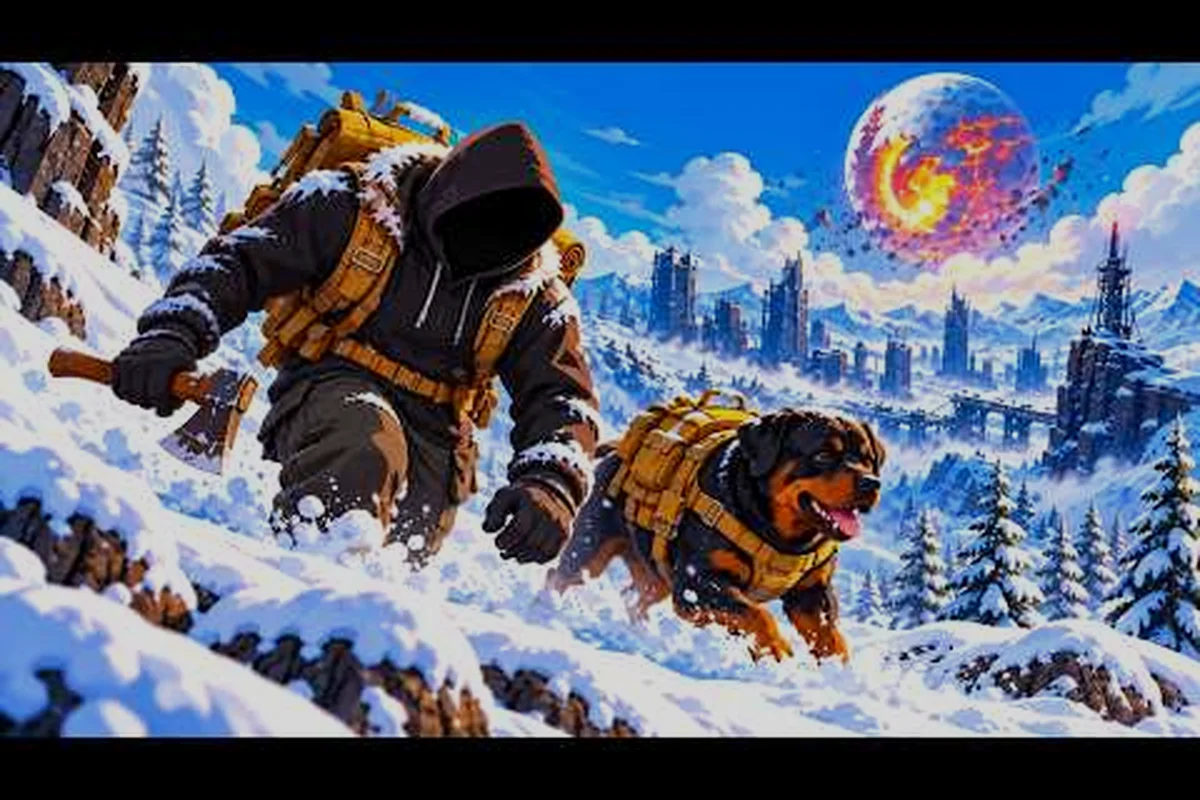
The frozen survival genre has a new challenger, and the comparison hunters are already circling. Permafrost entered early access with a story-driven open world, while The Long Dark remains the benchmark for quiet, brutal isolation. This guide breaks down permafrost vs the long dark across survival mechanics, base building, atmosphere, and performance so you can decide which winter deserves your hard drive space.
Survival Depth: How Each Game Punishes You
The core promise of both titles is simple: do not freeze, do not starve, do not die alone. The execution could not be more different. The Long Dark builds its tension around interloper-style scarcity, where every match, calorie, and piece of cloth is a strategic decision. Permafrost takes a more structured approach, layering a story-driven narrative onto its survival loop while still demanding constant attention to body temperature and exhaustion.
The Core Survival Loops Compared
Permafrost casts you as a Rook, an engineer drawn into the frozen apocalypse by a radio signal from a lost friend. This narrative framing immediately changes the survival calculus. You are not just surviving; you are rebuilding, restoring technology, and following clues. The Long Dark gives you no such mission. You wake up after a geomagnetic disaster and simply exist, with survival itself as the only objective.
| Survival Element | Permafrost | The Long Dark |
|---|---|---|
| Hunger and Thirst | Present, tied to scavenging and hunting | Core mechanic, calorie-dense management |
| Body Temperature | Constant threat, clothing and shelter matter | The primary killer, wind chill is brutal |
| Wildlife Threats | Huntable but scarce, traps recommended | Wolves and bears are active predators |
| Story Integration | Central narrative drives exploration | Episodic story mode exists, sandbox is king |
| Crafting Depth | Tech restoration and repair focus | Clothing, tools, and improvised gear |
The difference in philosophy becomes clear quickly. Permafrost wants you to feel like an engineer solving a frozen puzzle, while The Long Dark wants you to feel small and fragile. Neither approach is wrong, but they attract different players. Permafrost rewards planning and base restoration, whereas The Long Dark rewards improvisation and risk management on the move.
Scarcity and Resource Pressure
Resource pressure defines the survival genre, and here the two games diverge sharply. The Long Dark is famous for its interloper mode, where matches become precious beyond reason and a single wrong turn can end a 50-day run. Permafrost softens this edge with a rebuilding focus, giving you more tools to create sustainable systems rather than constantly scavenging for scraps.
According to community testing from early access players, Permafrost's resource curve feels more forgiving in the opening hours but ramps up significantly once you start restoring larger structures. You will need salvaged components, wiring, and fuel to bring dormant technology back online, which creates a different kind of pressure: not just staying alive, but finding the right parts. The Long Dark rarely asks you to collect specific components; it asks you to survive with whatever you can carry.
Base Building and Shelter Mechanics
Shelter is where Permafrost makes its boldest departure from The Long Dark. The Long Dark offers fixed interiors—cabins, caves, and industrial buildings that you can occupy but never truly modify. Permafrost introduces a full base building system, allowing you to construct, repair, and expand structures in the endless winter.
Construction and Restoration
Permafrost's building mechanics tie directly into its engineer fantasy. You are not just finding shelter; you are creating it. The game encourages you to restore ruined buildings, set up workstations, and create a functional home base that evolves over time. This includes roofing, insulation, and layout decisions that affect your survival efficiency. For players who want to dig deeper into structural mechanics, the permafrost roof guide covers insulation and blizzard-proofing strategies in detail.
The Long Dark offers no comparable system. Your shelter options are pre-existing structures with fixed layouts. You can store items, cook, and sleep in them, but you cannot add walls, repair roofs, or expand living space. This limitation is deliberate—it reinforces the theme of impermanence and the constant need to move. Permafrost, by contrast, roots you in place and rewards long-term investment in a single location.
| Shelter Feature | Permafrost | The Long Dark |
|---|---|---|
| Build from Scratch | Yes, full construction system | No, fixed interiors only |
| Repair Existing Structures | Yes, restore ruined buildings | Limited, cannot modify layout |
| Base Expansion | Yes, modular additions | No, static interiors |
| Storage Management | Custom storage and workstations | Container-based, limited organization |
| Defensive Design | Insulation and weatherproofing matter | Shelter choice matters, no building |
The Dog as a Differentiator
One feature that sets Permafrost apart is the canine companion at your side. This dog is not just cosmetic; it helps with carrying, gathering, and guarding. The Long Dark has no companion system at all—you are completely alone, which is thematically intentional but mechanically isolating. Permafrost's dog adds a layer of tactical depth and emotional warmth that contrasts sharply with The Long Dark's cold solitude. Players curious about optimizing this companion can check the permafrost dog mechanics guide for carrying capacity and gathering tips.
The companion also changes resource management. Your dog can carry supplies, retrieve items, and alert you to threats, effectively expanding your inventory and awareness. The Long Dark forces you to make hard choices about what to carry because you are the only pack mule. This single difference fundamentally alters the pacing of exploration and the risk-reward calculus of long expeditions.
Atmosphere and Narrative Approach
Atmosphere is where both games excel, but they aim for different emotional targets. The Long Dark is a meditation on solitude—silent forests, wind howling through abandoned buildings, and the constant awareness that no one is coming to help you. Permafrost is a story-driven thriller—a mystery about a lost friend, a frozen world with a cause, and a sense that your actions matter beyond mere survival.
Visual and Audio Design
The Long Dark's art style is painterly and stylized, with a distinctive visual identity that has aged well since its 2014 debut. Its sound design is sparse and deliberate, using silence as a weapon. Permafrost, built on modern technology, offers more detailed environments and dynamic weather effects. The official Permafrost Steam page describes a future Earth caught in a winter that has not ended, and the visual execution matches that premise with dense snow, ice-covered ruins, and dramatic lighting.
| Atmospheric Element | Permafrost | The Long Dark |
|---|---|---|
| Art Style | Detailed, realistic environments | Stylized, painterly aesthetic |
| Narrative Presence | Central story with characters | Episodic story, sandbox focus |
| Emotional Tone | Hopeful, determined | Melancholic, isolating |
| Weather Effects | Dynamic blizzards and snow | Harsh wind chill and storms |
| Music and Audio | Cinematic score, ambient cues | Sparse, atmospheric sounds |
The Story Question
Permafrost's narrative hook—a message from a friend you lost touch with years ago—gives every survival action a purpose beyond staying alive. You are not just gathering wood; you are gathering wood to fuel your journey toward answers. The Long Dark's story mode exists, but its heart is the sandbox, where the only story is the one you write through survival decisions. This distinction matters because it changes how players engage with the world. Permafrost players explore to advance the plot; The Long Dark players explore to understand the world's silence.
Permafrost Compared to Frostpunk: A Different Kind of Cold
The comparison to Frostpunk is inevitable given the thematic overlap, but the games occupy completely different genres. Frostpunk is a city-builder and society sim, where you manage hundreds of citizens, make brutal moral decisions, and balance hope against discontent. Permafrost is a first-person survival sandbox, where you manage a single character, a dog, and a personal base.
Genre Distinctions
The core difference is scope. Frostpunk asks you to make decisions for a community—do you enact child labor laws, ration food, or sacrifice the few to save the many? Permafrost asks you to make decisions for yourself—do you risk a blizzard to scavenge a radio part, or wait out the storm and risk starvation? Both are about survival in extreme cold, but the scale and emotional register are entirely different.
| Comparison Point | Permafrost | Frostpunk |
|---|---|---|
| Genre | First-person survival sandbox | City-builder, society sim |
| Scale | Single character + dog | Entire city population |
| Core Loop | Scavenge, build, survive | Manage resources, make laws |
| Moral Choices | Personal survival ethics | Societal-level dilemmas |
| Failure State | Character death | City collapse, exile |
Where Permafrost Feels Familiar
If you have played Frostpunk, you will recognize the endless winter premise and the emphasis on heat management as a systemic challenge. Permafrost borrows the visual language of frozen apocalypse—steam vents, coal piles, desperate engineering—but translates it into a personal, hands-on experience. You are not assigning workers to a coal mine; you are walking into the mine yourself, pickaxe in hand, hoping the ceiling holds.
Permafrost Best Settings and System Requirements
Performance matters when you are staring at a blizzard for hours. Permafrost is built on modern technology and demands more from your hardware than The Long Dark, which runs comfortably on modest systems. Getting the settings right can mean the difference between a smooth survival experience and a stuttering slideshow.
System Requirements Breakdown
The official specifications for Permafrost reflect its early access status and modern rendering techniques. While The Long Dark runs on nearly anything from the last decade, Permafrost expects a mid-range gaming PC at minimum. Community reports suggest that GPU-bound performance is the primary bottleneck, especially during dense snow effects and interior lighting transitions.
| Requirement Tier | Permafrost (Expected) | The Long Dark (Actual) |
|---|---|---|
| Minimum CPU | Modern quad-core | Dual-core, 2.0 GHz |
| Minimum GPU | GTX 1060 / RX 580 class | Integrated or GTX 260 class |
| Recommended GPU | RTX 2060 / RX 5700 class | GTX 660 or equivalent |
| RAM | 8-16 GB | 4-8 GB |
| Storage | SSD recommended | HDD acceptable |
Permafrost Performance Guide
Tuning Permafrost for stable frame rates requires attention to a few key settings. The volumetric snow effects and dynamic shadows are the biggest performance hitters, according to early access feedback. Reducing these two settings often yields the largest frame rate gains without a significant visual downgrade. The game also benefits from DLSS or FSR support if your GPU offers it, which can substantially improve performance at higher resolutions.
Players running mid-range hardware should prioritize a stable frame rate over maximum visual fidelity. The survival genre rewards situational awareness, and a stuttering frame during a wolf encounter or a sudden blizzard can be fatal. Locking the frame rate to 60 FPS and disabling unnecessary post-processing effects creates a more consistent experience. The permafrost early access review includes additional context on current optimization status and what to expect from future patches.
Which Frozen Survival Should You Choose?
The answer depends on what you want from your winter. Permafrost offers structure, narrative, and creative building—a survival game that wants you to rebuild civilization, not just endure it. The Long Dark offers purity, tension, and meditative isolation—a survival game that strips away everything except the raw question of whether you can make it through another night.
Player Profiles and Recommendations
Choose Permafrost if you enjoy base building, story-driven progression, and companion mechanics. The game rewards players who want to create a home, restore technology, and follow a mystery through a frozen world. The building systems, dog companion, and engineer fantasy give it a distinct identity that sets it apart from the pure survival competition.
Choose The Long Dark if you want uncompromising survival tension and atmospheric solitude. The game has earned its reputation as the genre benchmark for a reason—its interloper mode remains one of the most challenging survival experiences available, and its art direction creates a world you can feel in your bones. There is no building, no companion, and no hand-holding, just you against the cold.
| Player Preference | Best Choice | Key Reason |
|---|---|---|
| Base Building | Permafrost | Full construction and restoration |
| Narrative Drive | Permafrost | Story-driven exploration |
| Pure Survival | The Long Dark | Uncompromising scarcity |
| Atmospheric Solitude | The Long Dark | Meditative, isolating |
| Companion Mechanics | Permafrost | Canine helper with utility |
| Low-End Hardware | The Long Dark | Runs on modest systems |
The Verdict
Permafrost is not trying to replace The Long Dark; it is offering a different flavor of frozen survival. The early access build shows promise, with a unique building system, a compelling narrative hook, and a canine companion that adds genuine tactical depth. However, The Long Dark remains the more polished and focused experience, with years of refinement and a clearer understanding of what makes survival tension work.
If you can only play one, consider your patience for early access roughness. Permafrost is still finding its footing, with optimization and content gaps expected in the current build. The Long Dark is a finished product with a decade of community trust behind it. For players who want to be part of a game's evolution and enjoy building mechanics, Permafrost is worth the investment. For players who want the definitive frozen survival experience right now, The Long Dark still holds the crown.
Frequently Asked Questions
Is Permafrost better than The Long Dark?
Permafrost offers base building, a story-driven narrative, and a canine companion that The Long Dark lacks. However, The Long Dark delivers more polished survival tension and runs on lower-end hardware. Your preference depends on whether you value creative building or pure isolation survival.
Does Permafrost have a story mode?
Yes, Permafrost features a story-driven open-world survival experience. You play as a Rook, an engineer drawn into the frozen apocalypse by a radio signal from a lost friend. The narrative gives exploration a clear purpose beyond mere survival, which distinguishes it from The Long Dark's sandbox focus.
What are the best settings for Permafrost performance?
The volumetric snow effects and dynamic shadows are the biggest performance hitters in Permafrost. Reducing these settings yields the largest frame rate gains. Enabling DLSS or FSR if your GPU supports it also significantly improves performance, especially at higher resolutions.
Can my PC run Permafrost?
Permafrost expects a mid-range gaming PC with at least a GTX 1060 or RX 580 class GPU and a modern quad-core CPU. An SSD is recommended for load times. The Long Dark runs on much more modest hardware, so consider your system before choosing between the two games.
Is Permafrost similar to Frostpunk?
Permafrost shares Frostpunk's endless winter premise and heat management themes, but it is a first-person survival sandbox rather than a city-builder. You manage a single character and dog, not a society of citizens. The moral dilemmas are personal rather than societal, making the two games fundamentally different experiences.