
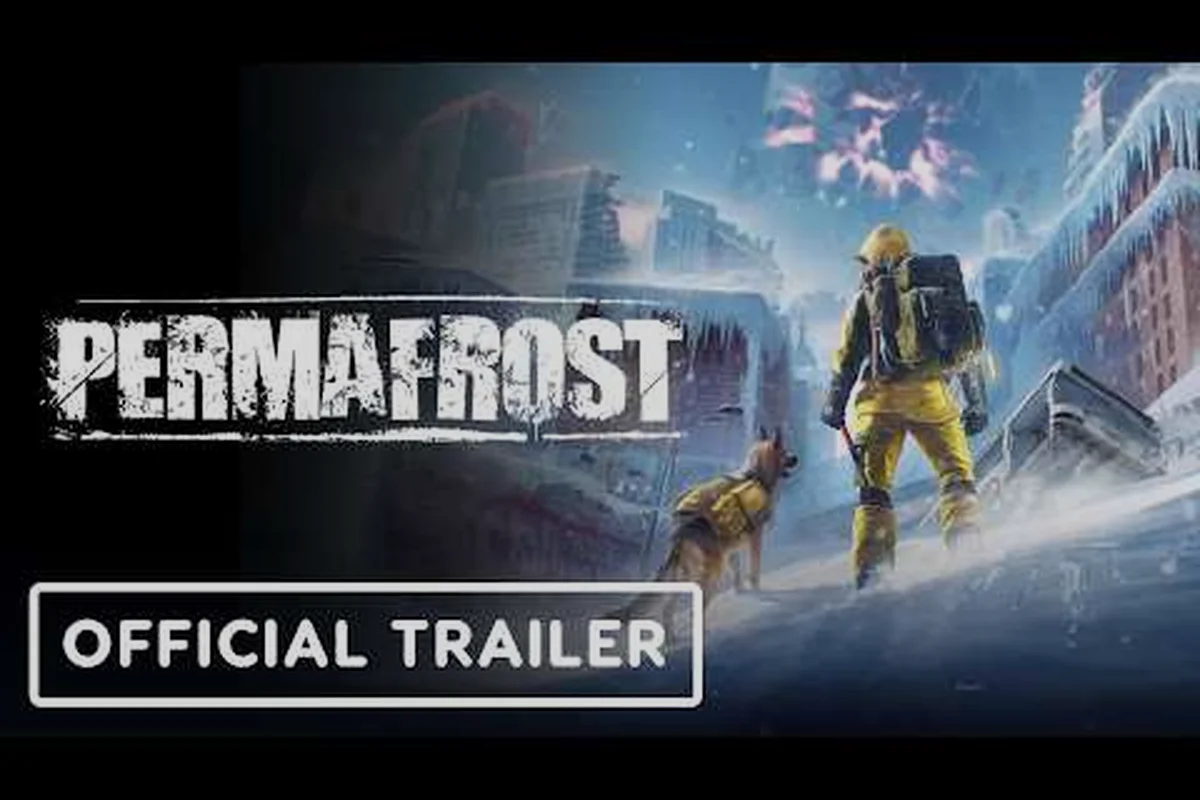
The permafrost community update matters because early access survival games live or die by their roadmap transparency. Players want to know whether the frozen world they are investing dozens of hours into will actually reach a complete state, and the developer's communication cadence directly shapes that confidence. This breakdown covers the confirmed early access timeline, what each patch has delivered, and the realistic window for the full 1.0 launch.
Understanding the Permafrost Early Access Timeline
Permafrost entered early access in 2026 through publisher Toplitz Productions, positioning itself as a story-driven open-world survival experience set on a future Earth that has stayed frozen since the collapse. The core fantasy casts you as a Rook, an engineer with rebuilding skills but minimal wilderness experience, pulled into the frozen landscape after picking up a transmission from a friend thought dead. That narrative hook matters because it frames every survival mechanic as part of a larger mystery rather than a sandbox with no endpoint.
The early access timeline follows a familiar pattern for ambitious survival titles: establish the core loop first, then layer in narrative beats, then optimize performance and content density before the 1.0 push. Community reports consistently highlight that the developer has prioritized stability patches alongside content drops, which is a healthy signal for players burned by other early access projects that front-loaded features and ignored technical debt.
| Phase | Expected Window | Focus Area | Community Signal |
|---|---|---|---|
| Initial Early Access | 2026 launch | Core survival loop, base building, story intro | Mostly Positive reviews (75% of 286) |
| Content Expansion | Mid-to-late 2026 | New biomes, crafting tiers, narrative chapters | Patch cadence feedback |
| Optimization Pass | Pre-1.0 | Performance, FPS stability, crash fixes | Bug report volume decline |
| Full 1.0 Release | TBD (announced later) | Complete story, polished systems | Official announcement |
The permafrost early access timeline is not locked to a single date because the developer has avoided overpromising a specific 1.0 window. That restraint is worth noting: studios that announce a hard date too early often ship incomplete or delay repeatedly, eroding trust faster than silence would. Based on the current patch velocity and the scope of systems already in place, a reasonable community estimate places the full release somewhere in 2027, though that remains speculative until an official roadmap update lands.
What the Permafrost Changelog Reveals About Development Priorities
Reading the permafrost changelog across early access patches tells you more about a game's trajectory than any marketing trailer. The changelog is where developers reveal what they consider broken, what they consider finished, and where they are willing to spend limited engineering hours. For Permafrost, the changelog pattern shows a team balancing three competing demands: expanding the survival sandbox, stabilizing the technical foundation, and protecting the narrative pacing.
Early patches focused heavily on core survival tuning — hunger, exhaustion, and cold resistance values needed iteration because those numbers define the moment-to-moment tension. If cold is too punishing, new players quit before the story hooks them. If it is too forgiving, the "endless winter" fantasy collapses. Community feedback loops through Steam discussions shaped several of these balance passes, with players reporting that early builds felt brutal but fair after the first tuning update.
| Changelog Category | Typical Changes | Player Impact |
|---|---|---|
| Survival Balance | Cold resistance curves, hunger drain rates, stamina costs | Directly affects session length and difficulty feel |
| Crafting & Tech | New recipes, repair mechanics, technology restoration | Expands mid-game progression options |
| Performance | FPS improvements, crash fixes, memory optimization | Determines playability on mid-range hardware |
| Narrative | Story chapters, radio signal events, character moments | Drives the main quest forward |
The permafrost update cadence has not been a firehose of content, and that is a deliberate choice rather than a sign of trouble. Each patch bundles a handful of meaningful changes with a larger list of fixes, which keeps the game in a playable state while the roadmap unfolds. Players who want the full picture of what changed in each drop should check the detailed patch notes breakdown for version-by-version specifics.
Permafrost Update 1.0: What the Full Release Needs to Deliver
The question of permafrost when full release is really a question about scope. A survival game can technically leave early access with a complete core loop but a thin story, or a rich story with shallow systems. Permafrost's pitch — a grounded, story-driven survival experience — means the 1.0 version must land both halves convincingly, otherwise the early access promise collapses at the finish line.
Community expectations for the permafrost update 1.0 center on three pillars. First, the narrative must reach a satisfying conclusion, resolving the radio signal mystery and the Rook's arc. Second, the technology restoration system needs enough depth to justify the "engineer rebuilding civilization" fantasy beyond a handful of late-game unlocks. Third, the technical state must be clean enough that launch-day reviews focus on the game rather than the bugs.
| 1.0 Requirement | Current Status (Community Assessment) | Risk Level |
|---|---|---|
| Complete main story | Partially delivered through early access chapters | Medium |
| Polished survival loop | Core systems functional, balance still iterating | Low |
| Performance stability | Improving with each patch, some reports remain | Medium |
| Endgame content depth | Thin compared to mid-game progression | High |
| Co-op reliability | Functional but not fully stress-tested | Medium |
The permafrost update path toward 1.0 will likely include at least one major content drop before the final release candidate. That drop needs to address the endgame depth concern, because survival games that run out of meaningful goals after the story concludes struggle to retain players past the launch window. For players evaluating whether the current build is worth their time, the early access review breakdown covers the strengths and gaps in detail.
How the Community Update Shapes Player Decisions
A permafrost community update is not just a news digest — it is a decision-making tool. Players deciding whether to buy in during early access, whether to return after a break, or whether to wait for 1.0 all read the same update through different lenses. The developer's communication style therefore functions as a form of product design, shaping expectations before any code ships.
The current communication pattern suggests a team that values measured transparency over hype cycles. There are no weekly dev blogs promising the moon, but there are also no long silence gaps that make players wonder whether the project is abandoned. That middle path tends to produce a healthier community than either extreme, because it sets a baseline of trust without manufacturing artificial urgency.
| Player Type | What They Look For in Updates | Recommended Action |
|---|---|---|
| New buyer | Core loop stability, content volume, review trend | Buy if survival loop appeals, expect iteration |
| Returning player | New content since last session, performance fixes | Return after major content drops |
| 1.0 waiter | Story completion signal, endgame depth, bug count | Wait for official 1.0 announcement |
| Co-op group | Multiplayer stability, shared progression fixes | Test in current build before committing |
The permafrost early access timeline also matters for content creators and community leaders who build guides, wikis, and discussion spaces around the game. Every patch invalidates some existing knowledge while creating demand for new information, which is why the survival starter guide gets updated alongside each changelog rather than remaining static. That cycle of update, document, and refine is what keeps an early access community alive between major milestones.
Technical Stability and the Road to Launch
No permafrost community update would be complete without addressing the technical side, because performance issues are the most common reason early access survival games bleed players. Permafrost's open-world frozen setting is visually demanding, with dynamic weather, snow accumulation, and large draw distances all competing for frame budget on mid-range hardware.
The changelog history shows a consistent thread of performance optimization work, including memory allocation improvements and crash fixes tied to specific hardware configurations. Players on lower-end systems have reported the biggest gains from these patches, which suggests the developer is actively widening the playable hardware envelope rather than optimizing only for high-end rigs. For players still hitting stability walls, the crash and performance fix guide catalogs the most effective community-tested solutions.
| Technical Area | Community Report Trend | 1.0 Readiness Signal |
|---|---|---|
| FPS stability | Improving, occasional dips in dense areas | Needs one more optimization pass |
| Crash frequency | Declining with each patch | Approaching acceptable |
| Memory usage | Reduced after allocation fixes | Good |
| Co-op desync | Still reported in some sessions | Needs focused work |
| Save integrity | Rare corruption reports | Acceptable |
The official Permafrost Steam page remains the authoritative source for patch announcements and roadmap updates, with the developer posting changelog details alongside each build. Cross-referencing that page with community discussion boards gives the most complete picture of where the game stands at any given moment.
What the Community Update Means for the Genre
Permafrost is entering a crowded survival genre where The Long Dark already owns the "quiet frozen survival" niche and titles like Valheim and Sons of the Forest compete for the broader open-world survival audience. The permafrost community update therefore carries weight beyond this single game — it is a test case for whether a story-driven survival title can sustain early access momentum without multiplayer-first design or procedural content generation as a crutch.
The game's differentiation rests on its technology restoration fantasy, which gives progression a narrative purpose that pure sandbox survival lacks. Restoring a broken world through engineering skill rather than just surviving it is a compelling loop, but it only works if the restoration systems feel meaningful at every stage. Community feedback suggests the early restoration milestones land well, while the late-game restoration goals need more mechanical depth to justify the grind.
| Genre Competitor | Core Fantasy | Permafrost's Edge |
|---|---|---|
| The Long Dark | Pure survival isolation | Story-driven progression |
| Valheim | Norse sandbox progression | Grounded near-future setting |
| Sons of the Forest | Horror-tinged survival | Engineering and restoration focus |
| Icarus | Session-based survival | Persistent open world |
The permafrost update trajectory suggests the developer understands this positioning and is building toward it deliberately rather than chasing trends. That focus is rare in early access, where feature creep often dilutes a game's identity before it reaches 1.0. If the team maintains this discipline through the final stretch, the full release has a genuine chance to stand out in a saturated market.
Frequently Asked Questions
When will Permafrost leave early access and hit 1.0?
The developer has not announced a firm date for the permafrost update 1.0 launch. Based on the current patch cadence and remaining scope — story completion, endgame depth, and final optimization — community estimates point to 2027, but that remains speculative until an official roadmap update confirms the window.
What does the latest permafrost changelog include?
Recent changelog entries have focused on survival balance tuning, crafting recipe additions, and performance improvements. The developer bundles meaningful content changes with technical fixes in each patch, keeping the game playable while the roadmap unfolds. Check the official Steam page for the full version-by-version breakdown.
Is Permafrost worth buying during early access?
For players who enjoy story-driven survival and accept that systems are still evolving, the current build offers a solid core loop with a compelling narrative hook. The permafrost community update pattern shows consistent improvement, and the Mostly Positive review rating reflects a generally satisfied early access player base.
How often does Permafrost receive updates?
The update cadence is steady rather than rapid, with patches arriving at a pace that balances content expansion against stability work. The developer prioritizes shipping playable builds over frequent but broken drops, which means fewer updates than some competitors but higher average quality per patch.
Will my early access save carry over to 1.0?
The developer has not announced any save-wipe plans for the full release, and the current patch pattern suggests continuity is the goal. However, early access games sometimes require fresh starts when major systems change, so players should treat long-term save investment with mild caution until an official statement confirms compatibility.