
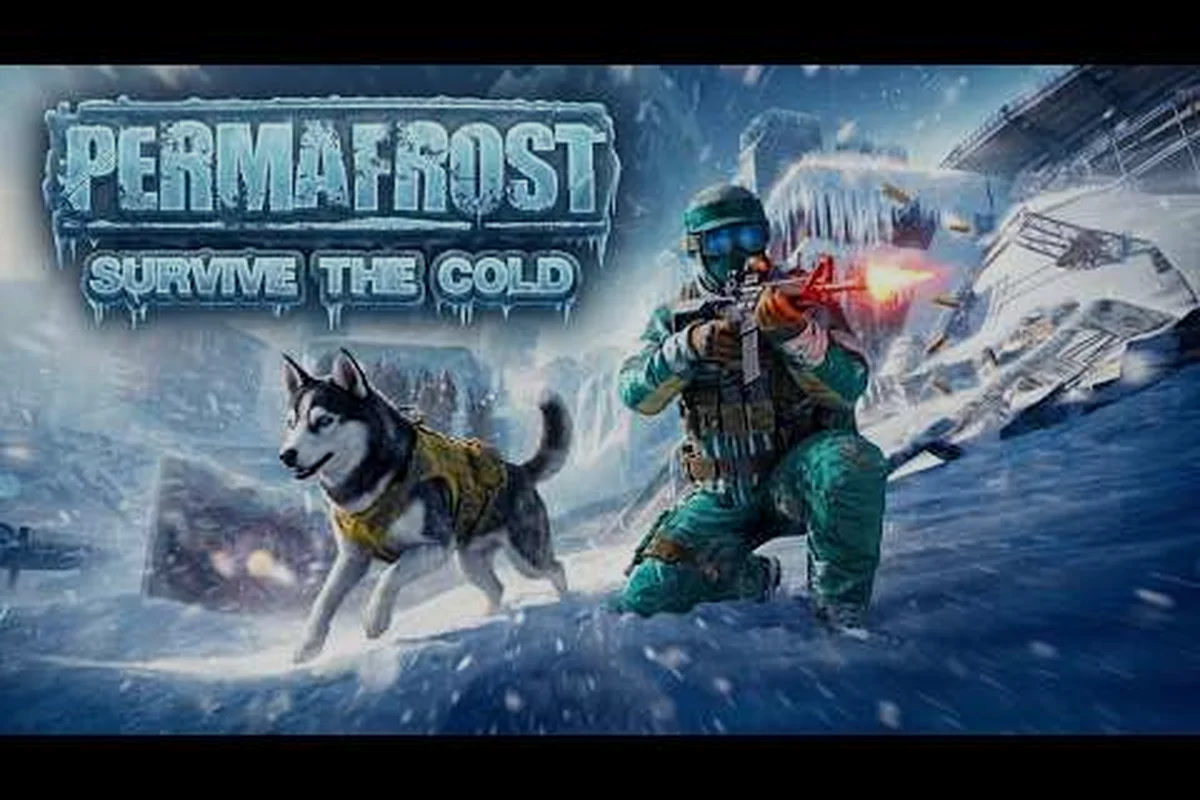
Understanding how permafrost biomes function is the single most important survival skill in the game, because every expedition into the frozen wastes hinges on reading terrain, tracking landmarks, and keeping a reliable bearing. The endless winter has buried familiar geography under ice and snow, which means players who rely on memory alone will quickly find themselves disoriented when whiteout conditions roll in. This guide breaks down the landmark system, compass mechanics, and expedition planning strategies that separate confident explorers from frozen corpses.
How Permafrost Biomes Shape Exploration
The world of Permafrost is not a single uniform ice sheet but a collection of distinct permafrost biomes, each with its own visual signature, resource distribution, and hazard profile. According to the official store page on Permafrost on Steam, the game presents an Earth in the near future where winter has refused to end, and players take on the role of a Rook engineer drawn into the frozen wilderness by a radio signal. That premise directly informs how biomes are designed: they are not decorative backdrops but functional zones that test different survival skills.
Community reports and early access impressions consistently describe three primary biome families that dominate the early and mid-game exploration loop. The first is the Buried Forest, where skeletal trees jut through deep snow and wind-carved ice formations create natural corridors. The second is the Frozen City, an abandoned urban sprawl where collapsed buildings and frost-covered vehicles provide both shelter and danger. The third is the Glacial Expanse, an open tundra where visibility is high but exposure risk is extreme.
Each biome family contains sub-variants that shift resource availability and navigation difficulty. For example, a Buried Forest near a river delta will feature more animal tracks and salvageable timber, while a high-altitude Glacial Expanse may offer rare mineral nodes but almost no cover from storms. Learning to identify these sub-variants at a distance is what transforms a struggling survivor into an efficient expedition leader.
| Biome Family | Visual Signature | Primary Resources | Main Hazard | Navigation Difficulty |
|---|---|---|---|---|
| Buried Forest | Skeletal trees, deep snow drifts | Timber, small game, herbs | Hidden crevasses | Moderate |
| Frozen City | Collapsed buildings, frost vehicles | Scrap metal, electronics, cloth | Structural collapse | High |
| Glacial Expanse | Open tundra, wind-carved ice | Minerals, rare salvage | Exposure, whiteouts | Extreme |
| Frozen River | Cracked ice sheets, dark water | Fish, clean water | Thin ice | Moderate |
| Mountain Pass | Steep slopes, rock outcrops | Stone, ore veins | Avalanches | High |
The table above reflects general community observations rather than hard-coded values, because the game's early access state means biome tuning may shift with patches. Still, the broad patterns hold: urban zones offer dense loot but demand careful route planning, while open tundra rewards preparation over improvisation.
Reading Permafrost Landmarks for Reliable Navigation
Permafrost landmarks are the backbone of any navigation strategy, because the game deliberately avoids giving players a detailed minimap with GPS-style markers. Instead, the world is filled with distinctive environmental features that serve as natural waypoints. A twisted radio tower on the horizon, a half-buried cargo ship, a cluster of red emergency beacons — these are the anchors that keep you oriented when snow erases your footprints.
The key to using permafrost landmarks effectively is understanding their visibility range and line-of-sight requirements. Tall structures like radio towers and crane arms are visible from great distances in clear weather, but they vanish entirely during whiteouts or heavy snowfall. Low-profile landmarks such as crashed snowmobiles or supply caches only become visible within a few hundred meters, which makes them useful for short-range confirmation rather than long-distance orientation.
Experienced explorers recommend building a mental landmark chain before setting out on any expedition. This means identifying at least three visible landmarks from your starting position, then planning a route that keeps at least one of them in view at all times. When you reach the first landmark, you scan for the next two, and so on. This chain method prevents the most common navigation failure: walking in circles because every snowbank looks identical.
| Landmark Type | Visibility Range | Best Use Case | Risk Factor |
|---|---|---|---|
| Radio Tower | Very high | Long-range bearing anchor | None, but exposed |
| Cargo Ship Wreck | High | Regional waypoint | Loot attracts predators |
| Emergency Beacon | Medium | Mid-range confirmation | Battery may be dead |
| Supply Cache | Low | Short-range checkpoint | Already looted often |
| Rock Outcrop | Medium | Wind shelter + waypoint | Avalanche zones |
One critical detail that new players often miss is that permafrost landmarks can change appearance based on weather and time of day. A landmark that is unmistakable at noon under clear skies may become a vague silhouette during twilight snowfall. Community testing suggests that landmarks with reflective surfaces, such as metal towers or glass building facades, remain slightly more visible in low light, which makes them preferable anchors for dawn or dusk travel.
Mastering the Permafrost Compass and Bearing System
The permafrost compass is not a magical GPS device but a physical tool that requires active reading and interpretation. Unlike many survival games where a compass arrow simply points north, the compass in Permafrost is affected by environmental factors that players must account for. According to player reports from the early access period, the compass needle can drift slightly during geomagnetic storms, which are telegraphed by aurora activity in the sky.
This drift mechanic means that permafrost navigation demands more than just checking a heading occasionally. You need to establish a baseline bearing when the weather is clear, then re-check that bearing at regular intervals to detect any drift. A common technique is to align the compass with a distant landmark, note the bearing, and then verify that bearing again after traveling for five minutes. If the bearing has shifted without any change in your direction of travel, a geomagnetic disturbance is likely active.
The compass also interacts with elevation in ways that affect permafrost expeditions. When you are in a deep valley or canyon, the compass may behave erratically due to mineral deposits in the surrounding rock. This is not a bug but a deliberate design choice that forces players to rely on landmark navigation in certain areas. The Frozen City biome is particularly notorious for compass interference, which is why urban expeditions require a different navigation mindset than open tundra travel.
| Compass Condition | Cause | Detection Method | Mitigation Strategy |
|---|---|---|---|
| Steady needle | Clear weather, open terrain | Bearing matches landmark | Normal navigation |
| Slight drift | Geomagnetic storm | Aurora visible, bearing shifts | Re-check every 2 minutes |
| Erratic needle | Mineral deposits nearby | Needle swings without pattern | Switch to landmark chain |
| Frozen needle | Extreme cold | Needle stops moving | Warm compass near body heat |
| False north | Metal structures | Bearing points to structure | Use distant landmarks |
The permafrost compass also has a durability aspect that players sometimes overlook. Extreme cold can cause the compass fluid to thicken, which slows the needle's response time. Keeping the compass in an inner pocket close to body heat mitigates this issue, but it also means you need to stop and retrieve the tool whenever you want to check a bearing. This small friction is intentional, because it forces deliberate navigation rather than constant map-checking.
Planning Permafrost Expeditions That Actually Succeed
Successful permafrost expeditions are built on preparation, not improvisation. The players who consistently return with full packs and intact gear are the ones who treat every journey as a mini-campaign with defined objectives, fallback points, and hard turnaround times. A common mistake is treating an expedition as an open-ended wander, which leads to overextension and death by exposure when the weather turns.
The first step in expedition planning is defining a primary objective and a secondary objective. The primary objective is the reason you are leaving your base: a specific landmark to investigate, a resource node to harvest, or a radio signal to trace. The secondary objective is a bonus that you pursue only if conditions remain favorable. This two-tier structure prevents the sunk-cost fallacy that kills so many explorers, because you always have a clear threshold for turning back.
Loadout planning is equally critical for permafrost expeditions. Community data from early access players suggests that the most common cause of expedition failure is not combat or starvation but running out of warmth resources. You need to calculate your warmth budget based on the biome you are entering, the expected travel time, and the weather forecast if one is available. A Buried Forest expedition in mild weather might require half the warmth resources of a Glacial Expanse crossing during a storm.
| Expedition Element | Minimum Requirement | Recommended Buffer | Failure Consequence |
|---|---|---|---|
| Warmth resources | Cover expected duration | +50% extra | Hypothermia, death |
| Food and water | Cover expected duration | +25% extra | Starvation, weakness |
| Navigation tools | Compass + 1 backup | Landmark notes | Getting lost |
| Repair materials | For critical gear only | +1 emergency kit | Gear failure |
| Signal flares | 2 minimum | 4 recommended | No distress signal |
The permafrost expeditions that succeed also share a common trait: they respect the turnaround rule. Before leaving, set a hard time or distance limit for when you will turn back regardless of progress. This rule feels wasteful in the moment, especially when you are close to a landmark, but it prevents the cascade of bad decisions that follows when you push just a little further into deteriorating conditions. The game's weather system is unforgiving, and a clear sky can become a whiteout in under ten minutes.
Uncovering Permafrost Secrets Hidden in the Frozen Wastes
Permafrost secrets are scattered throughout the world, and they reward explorers who pay attention to environmental storytelling rather than just following quest markers. These secrets range from hidden supply caches tucked into collapsed buildings to audio logs that reveal fragments of the game's larger mystery. The radio signal that draws your character into the frozen world is just the first thread in a much larger narrative web.
One category of permafrost secrets involves the buried infrastructure of the pre-freeze world. Subway entrances, maintenance tunnels, and underground parking structures often contain loot that surface explorers miss entirely. These locations are not marked on any map, but they can be identified by subtle surface clues: a ventilation grate poking through the snow, a section of railing that seems out of place, or a depression in the ground that suggests a collapsed roof below.
Another category involves the canine companion that accompanies your character. According to the official developer announcement on Toplitz Productions, the dog is not just a cosmetic companion but a functional partner in survival. Community testing suggests that the dog can detect certain permafrost secrets that human senses miss, such as buried caches or hidden passages. Paying attention to your dog's behavior — when it stops, whines, or digs at a specific spot — can reveal locations that would otherwise remain hidden.
The most valuable permafrost secrets are often locked behind environmental puzzles rather than combat encounters. A frozen lake might hide a submerged structure that becomes accessible only after you find a way to break the ice safely. A radio tower might broadcast a signal that leads to a hidden bunker if you triangulate the source correctly. These puzzles reward patience and observation, which aligns with the game's broader design philosophy of grounded, thoughtful survival.
| Secret Type | Detection Method | Typical Reward | Risk Level |
|---|---|---|---|
| Hidden Cache | Dog behavior, visual clues | Supplies, gear | Low |
| Audio Log | Radio static, landmark proximity | Story fragments | Low |
| Buried Bunker | Surface depression, ventilation | Rare loot, shelter | Medium |
| Submerged Structure | Ice cracks, dark shapes below | Unique items | High |
| Signal Source | Triangulation, compass work | Story progression | Medium |
The permafrost map guide provides additional context on how these secret locations fit into the broader world layout, which is useful when you are trying to determine whether a discovered secret is part of a larger chain or an isolated find. Understanding the spatial relationships between secrets helps you plan multi-objective expeditions that maximize your time in the field.
Advanced Navigation Techniques for Hostile Conditions
When the weather turns hostile, basic permafrost navigation techniques break down quickly. Whiteouts erase visual landmarks, wind obscures sound cues, and the cold itself slows your thinking. This is where advanced techniques separate survivors from casualties, and they all share a common principle: redundancy. You never rely on a single navigation method when the environment is actively trying to kill you.
The dead reckoning technique is essential for whiteout travel. Before visibility drops, note your exact bearing and estimate your walking speed. Then, when the whiteout hits, maintain that bearing using your compass while counting paces or tracking time. This method is imprecise but far better than wandering blindly. Community reports suggest that most players underestimate their pace count during storms, so it is wise to add a 10% correction factor to your distance estimates.
Another advanced technique is contour navigation, which uses elevation changes as invisible landmarks. Even when you cannot see distant landmarks, you can feel the ground rising or falling beneath your feet. By memorizing the elevation profile of your route before departure, you can navigate through whiteouts by matching the terrain underfoot to your mental map. This technique works best in mountainous biomes where elevation changes are pronounced, but it requires significant preparation.
| Technique | Best Condition | Key Requirement | Common Mistake |
|---|---|---|---|
| Dead Reckoning | Whiteout, flat terrain | Accurate pace count | Underestimating distance |
| Contour Navigation | Whiteout, hilly terrain | Pre-memorized elevation map | Ignoring subtle slopes |
| Landmark Chain | Clear weather, any terrain | Line-of-sight planning | Losing chain in valleys |
| Compass Triangulation | Clear weather, open terrain | Two visible landmarks | Using landmarks too close |
| Dog-Assisted Tracking | Any condition | Trained canine companion | Ignoring dog signals |
The beginner guide covers the foundational survival skills that support these advanced techniques, because you cannot effectively navigate hostile conditions if you are simultaneously fighting hunger, cold, and exhaustion. Navigation is a force multiplier, but it only works when your basic survival needs are already managed.
Building a Personal Landmark Database
The most valuable long-term investment you can make in permafrost navigation is building a personal landmark database. This is not a formal in-game system but a habit of recording what you discover, where you found it, and what it looked like from different angles. Players who maintain this habit consistently report faster travel times and fewer lost expeditions, because they build up a mental map that supplements the game's limited cartography tools.
Your landmark database should include not just major structures but also micro-landmarks that are easy to miss. A distinctive ice formation, a particular cluster of dead trees, a rock that looks like an animal from one angle — these small features are invaluable for confirming your position when you are close to your destination but cannot see the major landmarks. The difference between finding a hidden cache and walking past it often comes down to recognizing a micro-landmark that tells you to stop and search.
Recording permafrost landmarks systematically also helps you identify patterns that are not immediately obvious. For example, you might notice that supply caches tend to appear near certain types of terrain features, or that radio towers are spaced at regular intervals along old transportation routes. These patterns become navigation tools in their own right, because they allow you to predict where landmarks should be even before you see them.
| Database Entry | What to Record | Why It Matters |
|---|---|---|
| Landmark name | Distinctive feature | Quick mental recall |
| Position | Relative to other landmarks | Triangulation reference |
| Visibility | From which angles/distances | Route planning |
| Associated loot | What was found nearby | Return expedition value |
| Hazards | Nearby dangers | Risk assessment |
The what to do first guide offers practical advice on establishing your initial base and early exploration priorities, which is the foundation upon which a useful landmark database is built. Starting your database early means you accumulate navigation knowledge organically rather than trying to memorize the entire map at once.
Frequently Asked Questions
How do I find my way back to base in permafrost biomes?
Before leaving base, note the compass bearing from your base to a distant visible landmark. When returning, reverse that bearing and use the same landmark as your guide. If visibility drops, rely on dead reckoning and your pace count. Always leave a signal flare or marker at your base entrance.
What is the best landmark type for long-distance navigation?
Tall metal structures like radio towers and crane arms are the best long-distance landmarks because they remain visible from great distances and their reflective surfaces help them stand out in low light. Avoid relying on low-profile landmarks for long-range orientation, as they disappear quickly with distance or snowfall.
Can the compass malfunction in permafrost biomes?
Yes, the compass can drift during geomagnetic storms, behave erratically near mineral deposits, or freeze in extreme cold. Keep the compass warm in an inner pocket, re-check bearings regularly, and always maintain a landmark chain as a backup navigation method when compass reliability is uncertain.
How do I prepare for a long expedition into the Glacial Expanse?
Pack at least 50% more warmth resources than your expected duration requires, bring double the food and water you think you need, and carry two navigation tools. Set a hard turnaround time before departure. The Glacial Expanse offers high-value resources but punishes overextension more severely than any other biome.
Are there hidden secrets in every permafrost biome?
Not every biome contains major secrets, but most have at least minor hidden caches or environmental storytelling elements. Pay attention to your canine companion's behavior, surface irregularities like ventilation grates or depressions, and radio static that intensifies near certain landmarks. These clues often point to secrets that are easy to miss.