
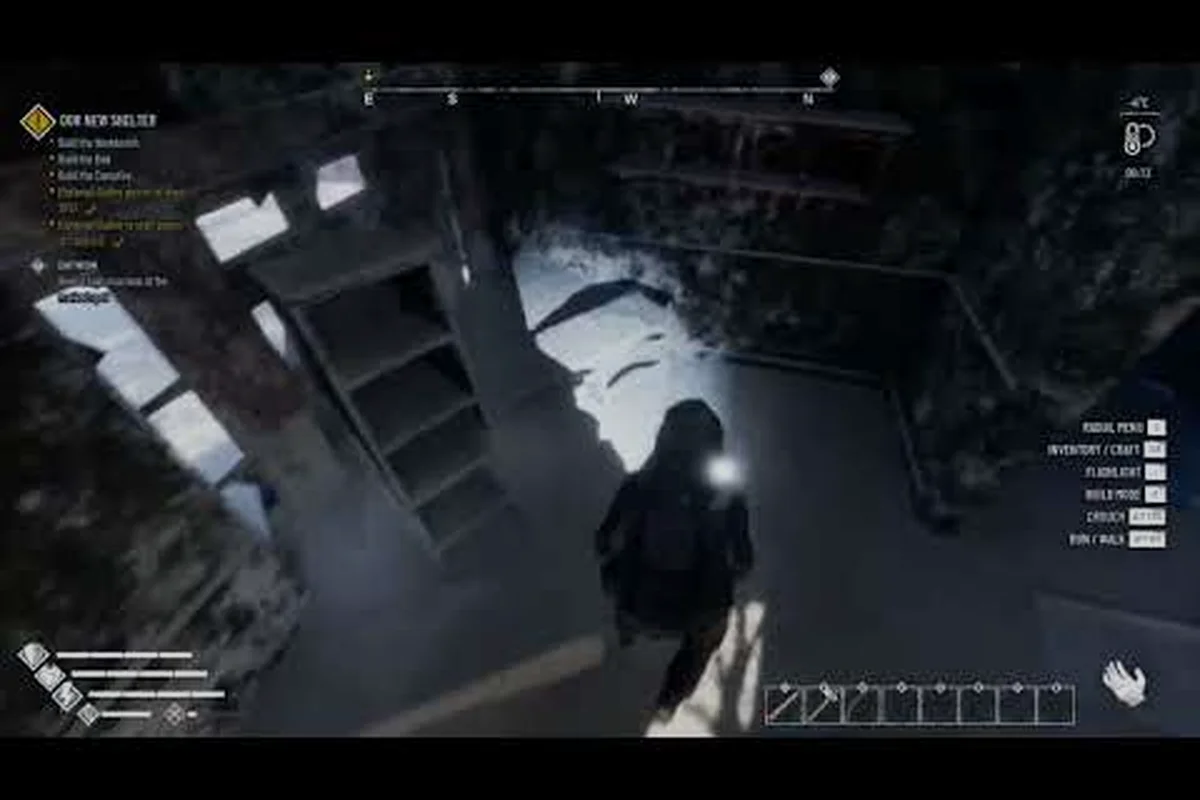
Permafrost is permafrost multiplayer? The short answer is yes — the game supports online co-op for up to four players, which fundamentally changes how you approach survival in the frozen wasteland. This matters because the endless winter is brutal alone, but a coordinated squad can split scavenging, crafting, and shelter-building duties to outlast conditions that would overwhelm a solo Rook. Understanding the exact multiplayer setup, including Steam requirements, crossplay limitations, and connection fixes, determines whether you and your friends can actually survive together.
Permafrost Multiplayer Fundamentals
The core question — permafrost is permafrost multiplayer — resolves cleanly once you examine the Early Access build. According to the official Steam page, the game supports online co-op with up to four players exploring the same frozen open world simultaneously. This is not a separate mode or a tacked-on feature; the entire story-driven survival campaign can be experienced cooperatively from the opening radio signal to the late-game shelter network.
The multiplayer architecture uses a host-based session system, meaning one player creates a world and invites others to join. That host's machine handles world state, wildlife AI, and weather simulation, while clients connect through Steam's networking layer. This design choice has practical consequences: the host's internet upload speed and PC stability directly affect everyone's experience, and if the host disconnects, the session ends for all players unless the world was saved to the cloud.
Progression sharing works differently than many co-op survival games. Story quests advance for the entire group when any player completes an objective, but individual inventory, skill unlocks, and discovered map locations remain tied to each character. This hybrid approach means you can jump into a friend's world without losing your own progress, yet you cannot simply carry over a fully-upgraded base from a solo run into a fresh co-op session.
| Multiplayer Feature | Details |
|---|---|
| Max Players | 4 (online co-op) |
| Session Type | Host-based, Steam networking |
| Story Progression | Shared across all players in session |
| Character Progress | Individual inventory, skills, map discovery |
| Solo Compatibility | Full campaign playable alone |
| Split-Screen | Not supported |
The Early Access label matters here. Community reports indicate that session stability has improved since the October 2026 launch, but players still encounter occasional desync when multiple survivors interact with the same container or crafting station simultaneously. The developer, SpaceRocket Games, has acknowledged these issues through Toplitz Productions' official announcements, and patches have targeted co-op synchronization bugs specifically.
Permafrost Co-op Requirements on Steam
Understanding permafrost co-op requirements prevents the frustrating scenario where you buy the game expecting to play with friends, only to discover missing dependencies. The baseline requirement is straightforward: every player must own a copy of Permafrost on Steam. There is no free guest pass or Friend's Pass system like some other co-op titles offer, which means a four-player squad needs four separate purchases.
Beyond ownership, the technical requirements are modest compared to the game's visual ambition. Because the host handles world simulation, client machines need less processing power, but all players should meet the minimum specifications to avoid frame drops during blizzards or wildlife encounters. The game does not currently support Steam Remote Play Together as an official workaround, though some players have experimented with it for split-screen-style local play with mixed results.
| Requirement Type | Minimum | Recommended |
|---|---|---|
| Game Ownership | Steam copy per player | Same |
| Internet Connection | 5 Mbps download / 1 Mbps upload | 15 Mbps download / 5 Mbps upload |
| Host Upload Speed | 3 Mbps stable | 10 Mbps for 4-player sessions |
| Steam Account | Free account required | Same |
| Region Match | Same download region preferred | Same region for lower ping |
| Voice Chat | External (Discord, Steam Chat) | Dedicated voice channel |
Steam friend integration is the primary method for joining sessions. You can invite friends through the Steam overlay, join via the in-game friends list, or accept an invitation from a notification. There is no server browser or public matchmaking system in the current Early Access build, which means you need to know the people you are playing with. This design choice keeps sessions private but limits the ability to find random co-op partners.
One frequently overlooked requirement involves game version matching. Because Permafrost receives frequent hotfixes during Early Access, all players in a session must be running the same build. If one player has an outdated client, the join attempt fails with a version mismatch error. Steam typically auto-updates games, but players who launch in offline mode or pause updates can fall behind and lock themselves out of co-op sessions until they sync.
Is Permafrost Crossplay Available at Launch?
The question of permafrost crossplay comes up constantly in community discussions, especially among groups where one friend plays on PC and another on a console or handheld. The current answer is definitive: Permafrost is a PC-exclusive title on Steam, with no announced plans for PlayStation, Xbox, or Nintendo Switch versions. This means crossplay is not applicable in the traditional sense — there are no other platforms to cross-play with.
However, a related question involves cross-region play and cross-version compatibility. Steam's networking allows players from different download regions to join the same session, though ping and latency increase with geographic distance. The host's location determines the baseline connection quality, so a host in Europe with clients in North America will experience noticeable input delay, especially during combat or precise crafting interactions.
| Platform | Availability | Crossplay Support |
|---|---|---|
| Steam (PC) | Available (Early Access) | N/A (only platform) |
| PlayStation 5 | Not announced | No |
| Xbox Series X/S | Not announced | No |
| Nintendo Switch | Not announced | No |
| Steam Deck | Playable (community reports) | Yes (same Steam ecosystem) |
| Epic Games Store | Not available | No |
Steam Deck compatibility deserves special mention because it technically counts as PC gaming. Community testing indicates the game runs on Valve's handheld, though performance dips during heavy weather effects. Since the Steam Deck uses the same Steam networking infrastructure, players on desktop PCs and Steam Decks can join the same co-op sessions without any additional configuration. This is the closest thing to crossplay that Permafrost currently offers.
The absence of console versions might disappoint some players, but it simplifies the co-op experience. There is no need to navigate platform-specific friend systems, no account linking requirements, and no version skew between console and PC builds. When permafrost crossplay questions arise in forums, the practical answer is that everyone needs to be on Steam, and then everything works through Steam's existing infrastructure.
Why Host Sessions Lag and How to Fix It
Permafrost co-op lag remains the most common complaint among multiplayer sessions, particularly when three or four players are spread across a large map. The root cause is usually the host-based architecture combined with the game's demanding weather and wildlife simulation. When the host's CPU struggles to process blizzard particles, animal pathfinding, and four players' actions simultaneously, every client experiences rubber-banding, delayed interactions, or inventory sync failures.
The first diagnostic step is identifying whether the lag originates from the host's hardware, the host's internet connection, or a game-side desync bug. Hardware-induced lag typically manifests as consistent frame drops for all players, while network-induced lag shows up as delayed interactions and teleporting wildlife. Desync bugs are more specific: one player sees a container as looted while another still sees items inside.
| Lag Symptom | Likely Cause | Quick Fix |
|---|---|---|
| All players freeze simultaneously | Host CPU bottleneck | Lower host graphics settings |
| Delayed container interactions | Host upload saturation | Reduce host background downloads |
| Wildlife teleporting | Packet loss on client | Switch to wired connection |
| Inventory not syncing | Desync bug | Rejoin session |
| Rubber-banding during blizzards | Combined CPU + network load | Limit session to 2-3 players |
| Voice chat works but game lags | Game-specific issue | Verify game file integrity |
Host selection strategy is the single most effective lag fix. The player with the strongest CPU and most stable upload connection should always host, even if they are not the group's usual leader. A host with a mid-range CPU but excellent internet will produce better results than a host with a high-end GPU but unstable Wi-Fi. Before starting a long session, have the intended host run a speed test and close bandwidth-heavy applications like streaming services or large downloads.
Graphics settings adjustments provide another layer of mitigation. While clients can lower their own settings to improve local frame rates, the host's settings affect everyone because the host machine renders the authoritative world state. Reducing shadow quality, particle effects, and draw distance on the host machine directly reduces the simulation load that contributes to co-op lag. The permafrost co-op guide covers additional optimization techniques for smoother multiplayer sessions.
Session size management is a pragmatic fallback when technical fixes are not enough. Dropping from four players to three or two significantly reduces the host's simulation burden and the network traffic between clients. Many community reports suggest that two-player co-op is nearly lag-free on adequate hardware, while four-player sessions require above-average specs and connections to maintain stability.
Permafrost Co-op Tips for Effective Team Survival
Permafrost co-op tips extend beyond technical setup into the strategic division of labor that makes multiplayer survival genuinely easier than solo play. The game's core loop — scavenge, craft, build, survive — scales well with multiple players, but only if the group coordinates roles and shares resources deliberately. Random looting and independent base-building waste the co-op advantage.
Role specialization emerges naturally from the game's skill system. One player focusing on hunting and trapping provides consistent food, while another prioritizing crafting unlocks advanced gear faster. A third player dedicated to shelter construction and heat management keeps the group alive during brutal cold snaps. This division mirrors real survival team dynamics and prevents the redundant effort that plagues uncoordinated co-op sessions.
| Team Role | Primary Focus | Key Skills | Best For |
|---|---|---|---|
| Hunter | Food, leather, wildlife | Trapping, tracking, ranged combat | Keeping food supply stable |
| Crafter | Tools, weapons, gear | Crafting, repair, resource refinement | Unlocking advanced equipment |
| Builder | Shelter, heat, storage | Construction, insulation, base layout | Surviving extreme weather |
| Scout | Map exploration, resource marking | Navigation, stealth, speed | Finding rare resources |
Communication protocols matter more than most new co-op groups expect. Because the map is vast and players often split up to cover more ground, establishing clear callouts for danger, resource discoveries, and weather changes prevents deaths and wasted trips. The game does not include built-in voice chat, so a dedicated Discord or Steam voice channel is essential for real-time coordination.
Resource sharing systems need to be established early. The game does not have a shared inventory, which means players must physically drop items for teammates or use storage containers at a shared base. Designating a central cache with labeled containers for food, materials, weapons, and medical supplies eliminates the "who has the bandages?" problem during emergencies. The beginner guide explains the early-game resource priorities that make this cache system effective.
Death and respawn mechanics in co-op require specific planning. When a player dies, they respawn at the nearest shelter or a designated spawn point, but they lose inventory items unless recovered. Having a teammate retrieve and hold the fallen player's gear prevents permanent loss, which is especially important for rare crafted equipment. This safety net is one of the strongest arguments for co-op over solo play.
Weather coordination is the final piece of effective team survival. Blizzards in Permafrost are deadly, and getting caught far from shelter during one is often fatal. Teams should establish a weather check-in protocol where players announce their distance from the nearest shelter when the sky darkens. If anyone is too far out, the group can decide whether to mount a rescue or have that player hunker down in a temporary shelter with emergency supplies.
How Co-op Changes the Permafrost Experience
Playing Permafrost in co-op transforms the game's emotional texture as much as its mechanical difficulty. The solo experience is one of isolation and quiet dread — a lone Rook against an indifferent frozen world. Co-op introduces shared tension and relief, where the howl of a distant predator triggers a group response rather than individual panic. This shift is not merely cosmetic; it changes how players approach risk, exploration, and the game's story beats.
Story delivery in co-op has drawn mixed community reactions. The narrative is built around a single Rook's personal journey, and having four players present during story moments can feel narratively incongruous. The game handles this by keeping cutscenes focused on the host's character while other players observe, which preserves the story's integrity but occasionally makes co-op partners feel like spectators rather than participants. The permafrost guide explores the story structure in more depth.
Difficulty scaling is a topic of ongoing debate. The game does not appear to scale enemy health or resource scarcity based on player count, which means four-player co-op is significantly easier than solo play in terms of combat and resource gathering. However, the increased consumption rate — four mouths to feed, four bodies to keep warm — partially offsets this advantage. The net effect is that co-op feels more forgiving in combat but demands more efficient resource management.
| Aspect | Solo Experience | Co-op Experience |
|---|---|---|
| Combat Difficulty | High (no backup) | Lower (team support) |
| Resource Consumption | Low (one survivor) | High (multiple survivors) |
| Base Building Speed | Slow (all tasks solo) | Fast (parallel construction) |
| Exploration Coverage | Limited (one path at a time) | Extensive (split routes) |
| Death Penalty | Severe (gear loss risk) | Manageable (teammate recovery) |
| Emotional Tone | Isolation, dread | Shared tension, camaraderie |
Long-term engagement trends from the community suggest that co-op players log significantly more hours than solo players. The social dimension — planning expeditions, celebrating successful hunts, commiserating after failed shelter defenses — creates a retention loop that solo survival cannot match. This pattern aligns with broader survival genre trends where multiplayer modes extend game lifespan substantially.
The Steam updates page tracks developer announcements about co-op improvements, and the Early Access roadmap suggests that multiplayer features will continue to receive attention. SpaceRocket Games has indicated through official channels that co-op stability and quality-of-life improvements are priorities for upcoming patches, which bodes well for players investing in the multiplayer experience now.
Frequently Asked Questions
Is Permafrost multiplayer on Steam?
Yes, Permafrost supports online co-op for up to four players through Steam's networking infrastructure. Every player needs their own Steam copy of the game, and sessions are host-based, meaning one player creates the world and invites friends. There is no public matchmaking or server browser in the current Early Access build.
Does Permafrost have crossplay between PC and consoles?
No, Permafrost is currently a PC-exclusive title available only on Steam. There are no announced plans for PlayStation, Xbox, or Nintendo Switch versions, so traditional crossplay is not applicable. However, Steam Deck users can play with desktop PC players since both use the same Steam ecosystem.
How do I fix lag in Permafrost co-op?
Start by ensuring the player with the strongest CPU and most stable upload connection hosts the session. Lower graphics settings on the host machine, close bandwidth-heavy applications, and reduce session size from four players to two or three if lag persists. Wired connections and verifying game file integrity also help.
Can I play Permafrost co-op with random players?
No, the current Early Access build does not include public matchmaking or a server browser. You can only join co-op sessions through Steam friend invitations or the in-game friends list. This means you need to know the people you are playing with, though community Discords exist for finding co-op partners.
Does Permafrost co-op share story progression?
Yes, story quests advance for the entire group when any player completes an objective. However, individual inventory, skill unlocks, and map discoveries remain tied to each character. This hybrid system lets you join a friend's world without losing your own progress or carrying over a fully-upgraded base from solo play.